
Get a Free Quote
Thank You!
We'll get back to you shortly. For immediate help, call (216) 238-8323.

Cleveland Sump Pump installs, replaces, and repairs sump pumps for homeowners across Cleveland and the surrounding suburbs. When your basement takes on water, your pump runs nonstop, or it quits in the middle of a storm, we find out why and put in a system built to keep the water out. What we handle runs from sump pump installation and replacement to repairs, battery and water-powered backup, and the pit, check valve, and discharge line that carry the water away for good. One crew sizes the whole system, not just the pump.
Around here the water always has somewhere it wants to go, and too often that is your basement. Cleveland sits on heavy lake-plain clay with a high water table, and our lake-effect snow and spring melt keep pushing groundwater against the foundation long after the rain stops. A sump pump is the one piece that actively pulls that water back out, so we size the pump and pit to your home, protect the discharge line against our deep winter frost, and back it up for the storms that knock the power out. Every job starts with a free on-site estimate.
A sump pump rarely dies quietly. These are the warning signs we see most on Cleveland basements, and most of them give you time to act before the next storm.
A pump that never shuts off, or clicks on and off every few seconds, is usually fighting a stuck float, an undersized pump, or more groundwater than it was built to move. Left alone it burns out the motor fast, and a burned-out pump is a flooded basement waiting for the next storm.
If you have found water on the floor while the pump sat there dry, the float switch, the check valve, or the power to the pit has likely failed. This is the failure that does the most damage, and it is the one a quick test catches before the water does.
Rattling, grinding, or a loud hum means worn bearings, a jammed impeller, or a pump vibrating against the pit wall. A healthy pump runs with a steady low hum, so any new noise is an early warning that the motor is on its way out.
Most sump pumps last seven to ten years, and the ones that fail with no warning are almost always past that mark or running with no backup at all. If yours is near a decade old, or a power outage would leave you with nothing, it is living on borrowed time.
Everything we do keeps water out of your basement and keeps your pump ready for the next storm. Here is what we install and service across the Cleveland area.
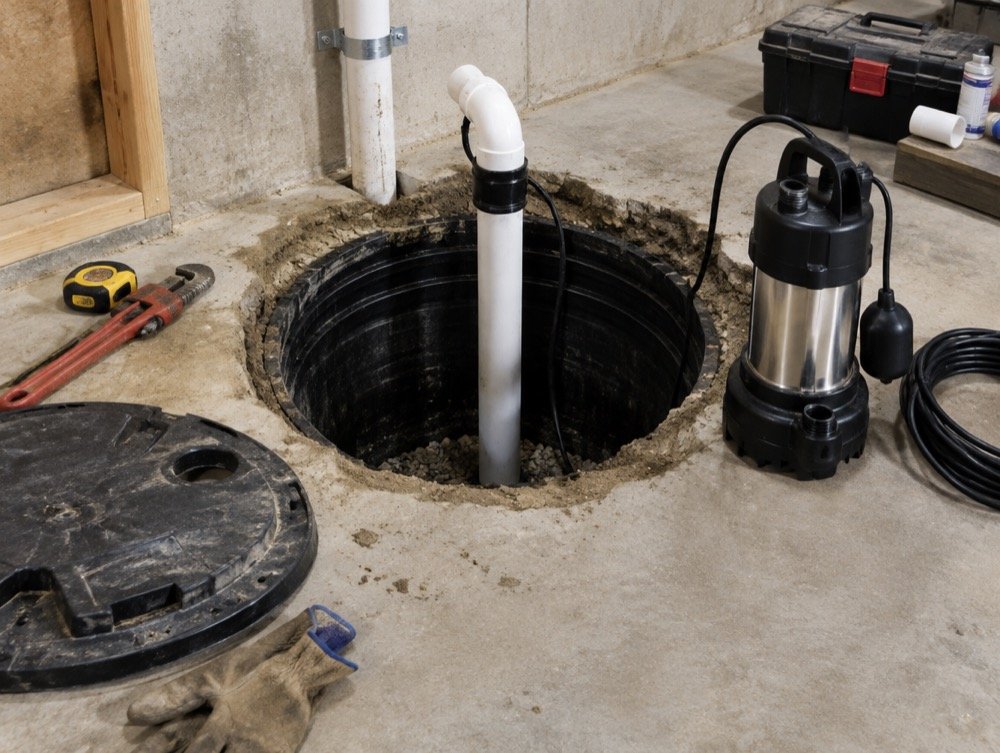
A sump pump installation is the core of a dry Cleveland basement. We set a sump pit at the low point of the basement floor, bed it in gravel so groundwater can collect, and drop in a pump that switches on the moment the water rises. For most homes that means a submersible pump sized to how much water your foundation actually takes on, from a 1/3 horsepower unit for a typical basement up to 1/2 horsepower or more where the water table runs high.
Getting the install right is more than dropping a pump in a hole. We match the pump and pit to your home, run a solid discharge line that carries water well away from the foundation, and set a check valve so the water the pump pushes out cannot drain back into the pit. Because Cleveland's frost line runs about 42 inches deep, we route and pitch the discharge so it will not freeze and lock up in January, and we tie the pump into a dedicated GFCI outlet.
Whether your home has never had a pump or you are adding one after a wet spring, we walk the basement first, find where the water is getting in, and tell you what the system needs before we quote it. Every install comes with a backup conversation, because a pump with no backup is one power outage away from a flooded basement.
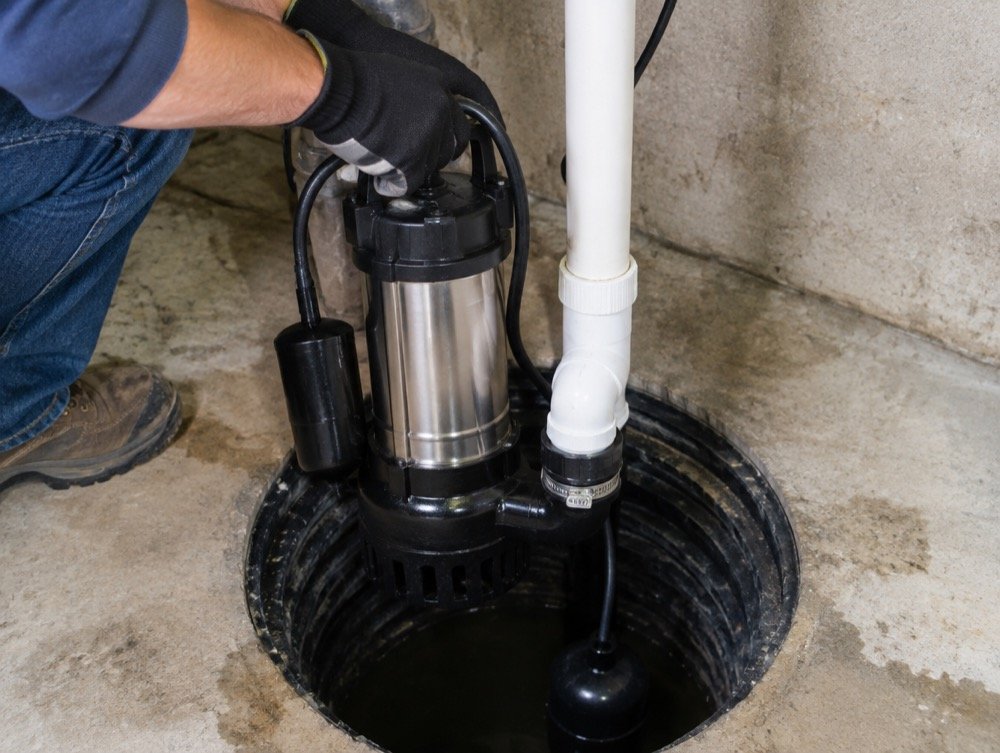
If your pump is pushing ten years old, cycling constantly, or it already failed and left water on the floor, replacement is usually the smarter call than another repair. Sump pumps wear from the inside, and once the motor, bearings, or impeller start to go, a rebuild rarely buys you more than a season. We pull the old unit, check the pit and the float for whatever killed the last pump, and set a new one sized right for your basement.
A replacement is also the moment to fix whatever the last installer skipped. We will upgrade an undersized pump, add or replace the check valve, swap a failure-prone float switch for a reliable one, and make sure the discharge actually carries water away instead of dumping it next to the foundation. If your old pump had no battery backup, this is the easiest time to add one, since the pit is already open.
Most replacements are a same-day job once we have seen the pit. We will tell you honestly whether yours is a straight swap or whether the pit, discharge, or wiring need attention too, so the new pump lasts its full life instead of inheriting the old one's problems.
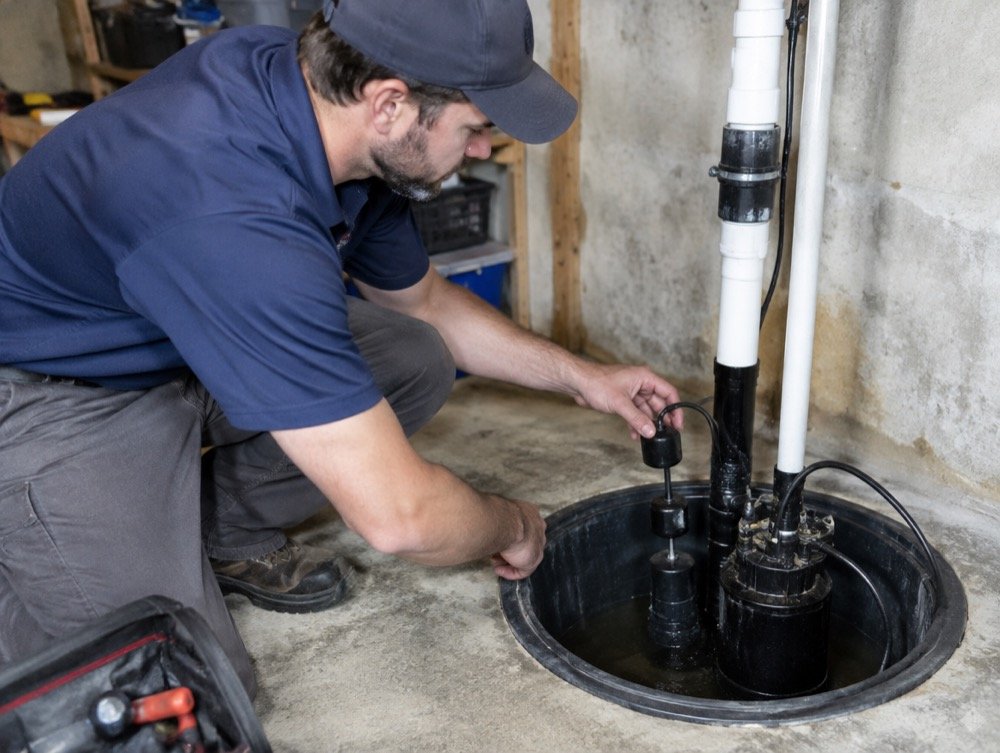
When a pump quits or starts acting up, it is often one part, not the whole unit. The most common culprit in Cleveland basements is the float switch, the piece that tells the pump to turn on. A float that sticks, hangs up on the pit wall, or wears out will leave a perfectly good pump sitting dry while water rises around it. We also see failed check valves, clogged or frozen discharge lines, jammed impellers, and tripped or miswired power.
We diagnose before we replace. We test the float and the switch, confirm the pump actually moves water and that the check valve holds, clear the pit and the discharge line, and make sure the pump is getting power on its own circuit. If a repair will get you reliably through the next few years, we do the repair. If the pump is near the end of its life, we will tell you that too, instead of selling you a fix that will not hold.
If your basement is taking on water right now, call us. A pump that is not keeping up during a storm is the one problem that gets worse by the hour, and a fast repair can be the difference between a damp floor and a flooded one.
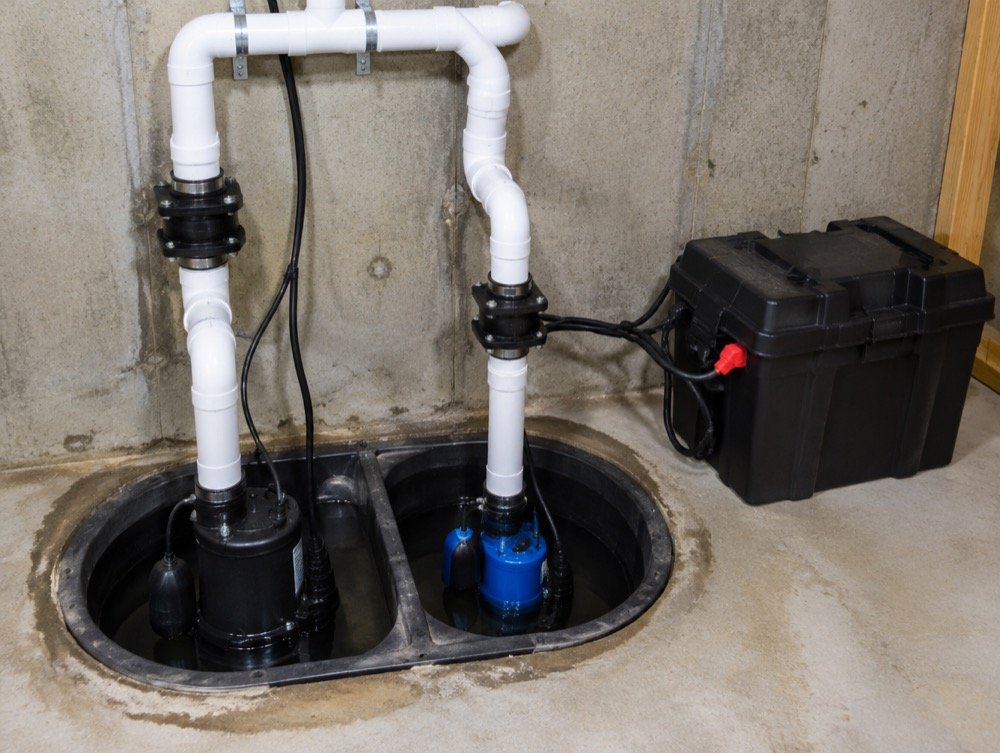
A sump pump only works when it has power, and in Cleveland the heavy storms that flood a basement are the same ones that knock the power out. That is exactly when your pump needs to run and cannot. A backup system is the fix, and it is the single most valuable add-on most basements can have.
A battery backup adds a second pump and a deep-cycle battery that takes over automatically the moment the primary pump loses power or cannot keep up. A larger battery runs longer, and a good system alarms so you know it has kicked in. For homes with reliable city water pressure, a water-powered backup is the other option: it uses no electricity at all and runs as long as the water keeps flowing, which makes it a strong choice for a basement that cannot be left unwatched during a long outage.
We size the backup to how fast your pit fills and how long your power tends to stay out, and we can add one to an existing pump or build it into a new installation. If your basement protects anything you care about, a backup is not a luxury, it is the part that keeps the main pump honest when the lights go out.
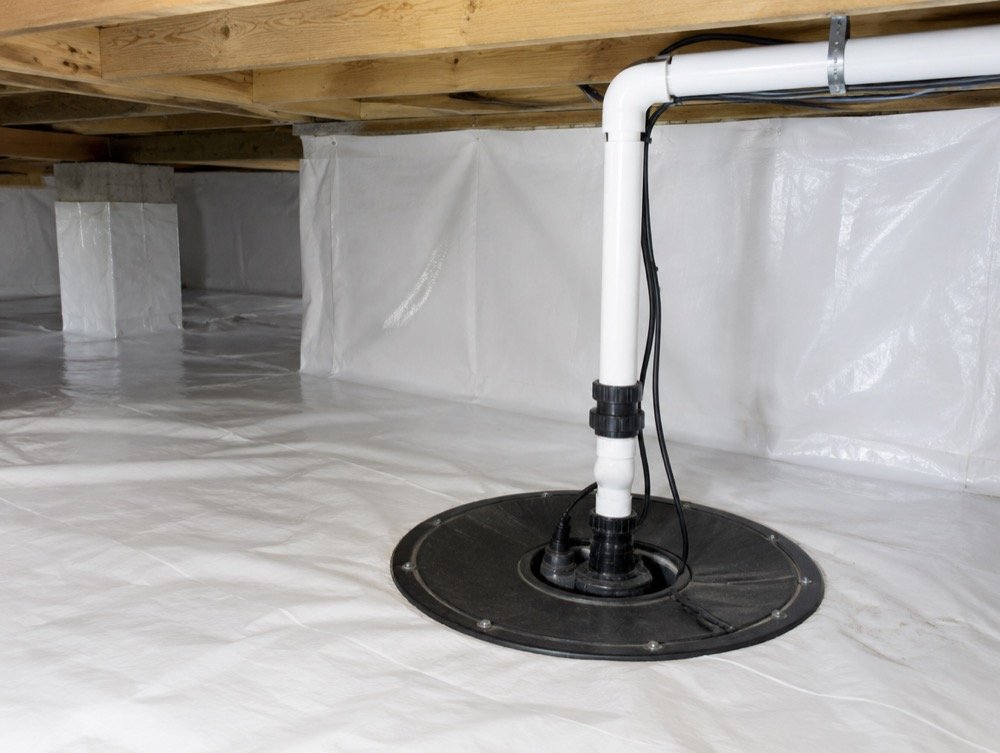
A sump pump is only as good as the pit it sits in and the line that carries the water away. The pit, or basin, needs to be the right size and set at the true low point so groundwater collects there instead of spreading across the floor. Too small a pit makes the pump cycle on and off constantly and burn out early; the right pit lets it run in longer, healthier cycles.
The check valve is the small part that does a big job. It sits on the discharge line and stops the column of water in the pipe from draining back into the pit every time the pump shuts off. Without a working check valve the pump re-pumps the same water over and over, which wastes the motor and shortens its life. We set a quality check valve and confirm it is holding on every service call.
The discharge line has to carry water far enough from the house that it does not just soak back down to the foundation, and in Cleveland it has to survive the cold. We pitch and route the line to drain and to resist freezing through a winter where the frost line reaches about 42 inches, and we make sure it lets out somewhere legal and sensible, not against your wall or onto a neighbor's lot.

Water in a Cleveland basement is rarely just about one hard rain. It is about what the ground around here does with water, and near Lake Erie the ground holds onto it and pushes it toward your foundation. Between the clay, the water table, and our long wet winters, the water has to go somewhere, and a basement is the low point it finds. Here is what is actually working against your foundation.
Much of Greater Cleveland sits on the Lake Erie lake plain, where the soil is heavy, slow-draining clay. Water does not soak through it, so after rain or snowmelt it collects and builds pressure against basement walls and floors. Close to the lake and the Cuyahoga River the water table also sits high, which means the ground around many foundations is wet a lot of the year, not just during storms.
Cleveland averages well over 50 inches of snow a year thanks to lake-effect off Lake Erie, on top of about 40 inches of rain. When a deep snowpack melts in a late-winter thaw, all of that water hits already-saturated clay at once. The ground cannot absorb it, so it runs down to the lowest point it can reach, which is often the base of your foundation.
A lot of Cleveland's housing stock is older, with stone or concrete-block foundations that were never fully waterproofed. Those walls have more joints and more porous surfaces than poured concrete, so when the soil outside is saturated, water finds its way through the cove joint where the wall meets the floor and through cracks in the block. A sump pump is what collects that water and sends it back out.
The same strong storms that overwhelm a basement are the ones that bring down the power, and a sump pump with no backup is useless the moment the lights go out. That is why so many Cleveland basements flood during a storm even with a working pump installed. A battery or water-powered backup is what keeps the water moving when the grid goes down.
None of this changes on its own, because the clay, the water table, and the weather are not going anywhere. The answer is to give the water a controlled way out: a properly sized pump in a proper pit, a discharge that carries it well away from the house, and a backup for the night the power fails. That is the system we build.
A sump pump is simple hardware, but a dry basement comes from getting the details right: the pit, the sizing, the discharge, and the backup. Here is how we do it.

It starts with a free on-site visit, not a number over the phone. We look at where the water shows up, check the grade and the foundation, and figure out how much water your basement really takes on and when. A pump sized to the wrong problem is why so many basements still get wet with a pump already in them.
Then we match the system to your home. We size the pump to how fast your pit fills, set the pit at the true low point so it is not short-cycling, and plan the discharge route before we dig. This is also where we decide on the backup, because in Cleveland a backup is part of the system, not an afterthought.
We set or rebuild the pit, bed it in gravel, drop in the pump, and run the discharge line with a check valve so water cannot flow back into the pit. We pitch and route the discharge to carry water well past the foundation and to resist freezing through a Cleveland winter, and we put the pump on a dedicated GFCI circuit.
Before we leave, we pour water into the pit and watch the whole system run: the pump kicks on, the check valve holds, the water lets out where it should, and the backup takes over when we cut the power. Then we show you how it works and what to check once a year, so you are not finding out it failed during the next storm.
We are not a general plumber or a basement remodeler who installs a pump on the side. Keeping Cleveland basements dry is the whole job, so you get a crew that sizes pits, sets check valves, and wires backups every day, not someone figuring it out in your basement.
We come out, look at your pit and your water problem, and tell you what is actually going on, even when the honest answer is a repair instead of a new system. If a float or a check valve fixes it, we will say so, and if the real issue is water coming through the walls, we will tell you that too.
You get a single price in writing before any work starts. No hourly meter, no surprise add-on halfway through, and no bigger number waiting at the end. The quote is the price.
Licensed, insured crews handle every job, and every install and repair is backed by a written warranty. Your home is covered while we work, and the system is covered after we leave, so a pump that is supposed to keep you dry actually does.
Most sump pump companies in Cleveland will not put a number on their site. We will. These are real, typical ranges for the Cleveland area so you can budget before anyone comes out. The exact price depends on your pit, your discharge, and how much water you are dealing with, so every job gets a firm quote at a free on-site visit.
Float switch, check valve, clog, or wiring. The common fix when the pump itself is still good.
Swapping an aging or failed pump, often reusing the existing pit.
A new pit, pump, and discharge, or adding battery or water-powered backup to protect against outages.
What moves the price: whether you need a repair, a straight swap, or a full new pit and discharge, the size and horsepower of the pump, whether you add battery or water-powered backup, how much digging the pit and discharge take, and any electrical work to get the pump on its own GFCI circuit.
These are typical Cleveland ranges for planning, not a quote. Every basement is different, so we price yours at a free on-site visit before any work begins.
Straight answers to what Cleveland homeowners ask us most about sump pumps, before and during a free on-site visit.
A new sump pump installation in the Cleveland area typically runs about $1,000 to $2,500 for a standard job with a new pit and discharge, while a straight replacement of an existing pump is often $500 to $2,000 and a repair is usually $150 to $500. Adding a battery or water-powered backup adds roughly $600 to $2,200. Your pit, your discharge run, and how much water you take on set the final number, so we give a firm price at a free on-site visit.
Most sump pumps last about seven to ten years. A pump that runs hard against a high water table, like many do in Cleveland, can wear out sooner, while one with a healthy pit and a working check valve tends to reach the longer end. Once a pump is past that range, replacing it before it fails is far cheaper than cleaning up a flooded basement.
In Cleveland it is strongly recommended, because the same storms that flood a basement are the ones that knock out the power, and a pump with no power cannot move water. A battery backup adds a second pump that runs off a deep-cycle battery when the power is out, and a water-powered backup uses your city water pressure instead of electricity. If your basement protects anything of value, a backup is the piece that keeps the water out when the grid goes down.
For most Cleveland basements a 1/3 horsepower pump is enough, but a home with a high water table, a deep basement, or a lot of incoming water often needs 1/2 horsepower or more. Bigger is not automatically better, because an oversized pump short-cycles and wears out early. We size the pump to how fast your pit actually fills, which we check on site.
Usually, yes. If your existing pit is the right size and in good shape, we can pull the old pump and drop in a new one the same day, and often upgrade the check valve and float while we are in there. If the pit is too small, cracked, or full of sediment, we will tell you, because a good pump in a bad pit will not last.
A pump that never shuts off is usually fighting a stuck float, an undersized pump, a failed check valve letting water drain back into the pit, or simply more groundwater than it was built to handle, which is common during a Cleveland spring melt. Running nonstop burns the motor out fast, so it is worth diagnosing quickly before the pump quits entirely.
Not at all. In a wet climate like Cleveland's, a sump pump is a sign the home is set up to manage water rather than a warning that something is wrong. What matters is the condition: how old the pump is, whether it has a backup, and whether the pit and discharge are in good shape. We are happy to inspect a pump during a home purchase and tell you what you are looking at.
A submersible pump sits down in the pit underwater, runs quieter, and usually moves more water, which makes it the common choice for a finished or frequently wet basement. A pedestal pump keeps its motor up on a shaft above the pit, costs less, and is easier to service, but it is louder and generally less powerful. We help you pick based on your basement and how much water you deal with.
The pump sends it out through a discharge line that has to carry the water far enough from the house that it does not just soak back down to the foundation. In Cleveland that line also has to be routed and pitched so it does not freeze in winter, and it has to let out somewhere legal, not onto a neighbor's property or into the street where codes do not allow it. We plan the outlet before we install.
We install, replace, and repair sump pumps for homeowners across Cleveland and the surrounding suburbs, from the East Side and West Side out through Cuyahoga County and the neighboring communities.